
More and more people are using AI daily through Answer Engine Optimization (AEO) and Generative Engine Optimization (GEO). AI has brought about a resurgence of the same global excitement about access to information as when household internet became readily available. The access to information, learning, and research is empowering millions of people to expand their knowledge and extend their impact. But what does this mean when it comes to associations?
The good news is that AI works off complex algorithms, just as a Google search does, and with algorithms comes logic and best practices, and the need for reputable sources that the algorithms assign quality scores to. This is a huge advantage for associations looking to get picked up on these platforms. This article will dive into what associations need to know about AEO and GEO to their advantage.
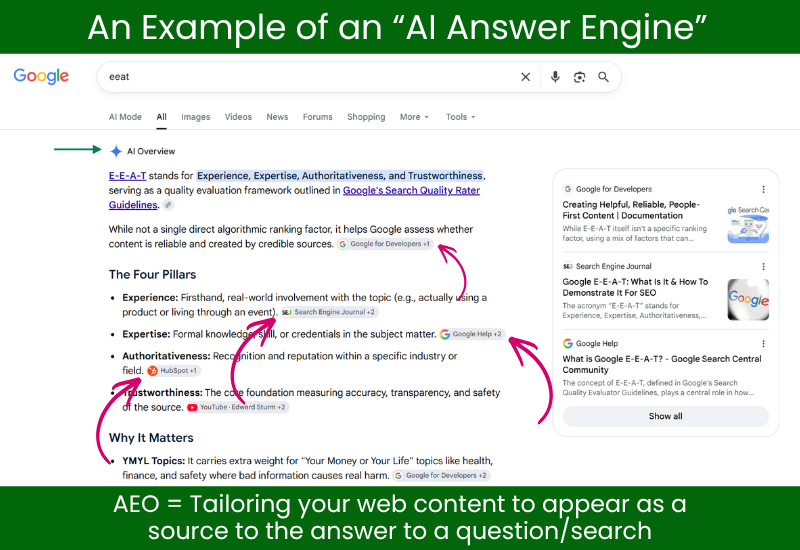
What Is Answer Engine Optimization (AEO)?
Answer Engine Optimization (AEO) is tailoring your website’s content (both written and visual) to be more easily parsable and usable for AI search platforms like Google AI Overviews and voice search. The goal of AEO is to be presented as a direct answer to a question asked to AI platforms and to appear as a simple snippet answer in Google results.
Implementing AEO includes assessing the type of content you include, the depth, and how you format it in relation to how an AI model would index it.
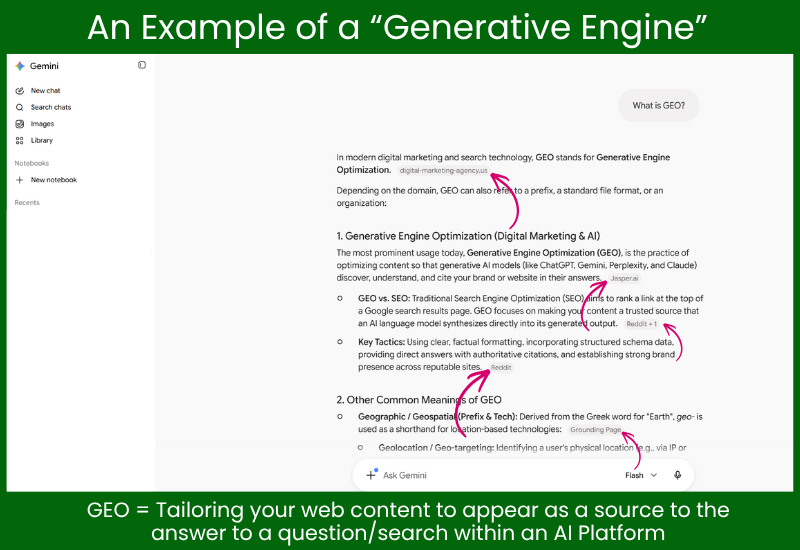
What is Generative Engine Optimization (GEO)?
Generative Engine Optimization (GEO) is structuring and adapting your website content in a way that will make it more likely to appear on AI platforms like Claude, ChatGPT, and Gemini. The goal of GEO is to increase brand awareness and authority as a source used by AI, while increasing the potential of traffic to your website should the person want to learn more.
What is AI Engine Optimization?
AI Engine Optimization is the umbrella term people use when referring to GEO and/or AEO.
Best Practices for AI Engine Optimization for Associations
If your website is SEO optimized, then you are in a position to easily optimize AI-powered search. Why? People have been asking search engines, like Google, for years to answer their questions.
Step 1: Ensure Your Content is Readable & Parse-able
While Natural Language Processing (NLP) has come a long way, crawlers still make better sense of simple sentences, shorter paragraphs, clear headings and subheadings, and bullet lists. In fact, AI loves to generate answers with bold subheadings and bullet points.
Step 2: Update Your Web Content & Remove Outdated Pages
Like Google’s algorithm, AI bots read meta data and compare webpage versions to provide searchers with ‘the latest and greatest.’ This can pose two problems for associations: 1) if your content is outdated, it can be a negative quality signal to the algorithm, and 2) if you have outdated content still available, that outdated content can confuse AI as to if the content is accurate.
If a crawler arrives on your website and finds conflicting information, or it must weigh differing versions of the same content, it likely won’t serve it, as it will find it to be unreliable. So, put content pruning on your to-do list.
A website with both current information and outdated content needs to go through a content audit to identify pages that need to be archived, unpublished, and/or redirected.
Step 3: Optimize for User Intent
Intent is vital. Understanding the “why” behind questions and tailoring content to reflect that intent will encourage crawlers to serve your content. For example, if someone searches: “Benefits of presenting at a research conference,” it can assume they are researching the value of submitting an abstract and would possibly be interested in submitting to your conference.
Step 4: Pique Interest and Offer More
Aim for breadth and depth of your content. Remember that AEO and GEO will provide users with the opportunity to dig deeper into a topic. So, consider what they would want to learn and write about it. If you can fully cover the subtopics, you will win the search visibility and brand awareness on AI platforms and AI search. This will provide your association with broader recognition as a leader in the space and increase your reach in the long-run.
Step 5: Do Not Try to Trick AI with AI. Offer New Ideas to the Landscape
Add something new to the conversation if you want to catch the attention of AI. Why? AI pulls from existing content, which means that if you’re using it for content creation, you’re not adding to the conversation, you’re mimicking the existing information that is already out there.
This is to say, while AI can synthesize, it can’t observe life or invent the same way a person can. So, if you’re asking AI to write content that you hope to rank for, you will be sorely disappointed.
Thought leadership will absolutely be your best friend in the new world of AI. Of course that takes more time, energy and the ‘thought’ in thought leadership, though.
Step 6: Ensure All Your Content Is Inclusive to All Users
Accessibility isn’t just for people (although, we will always argue that you need to consider how real people will interact with your website before anything else). Alt text, heading tags, featured images, hyperlinks, and contrast levels will ensure your user experience meets the needs of people and the web crawlers that AI platforms use to collect information.
Step 7: Stay in-the-Know with Your Competitive Landscape
Understand your competitive landscape and differentiators. Many people use AEO and GEO at the consideration phase of the marketing funnel. They’ll want to know how prices compare, value, and even reviews. Be sure to put your best foot forward and clearly define what makes your organization unique.
How are AEO, GEO, and SEO the same?
They all connect searchers/learners with the best information, and operate on very similar principles, including:
- Providing information that is accurate, easy to understand, and accessible
- Using reputable sources that demonstrate experience, authority, expertise, and trust
How do they differ?
Searchers are not clicking through to your website as often, now. Where searchers used to puruse through sources that appeared on search engine results pages, now, AI will compile answers for them. AI will also synthesize the top search answers into one coherent response.
Are people still using Google to find and discover associations?
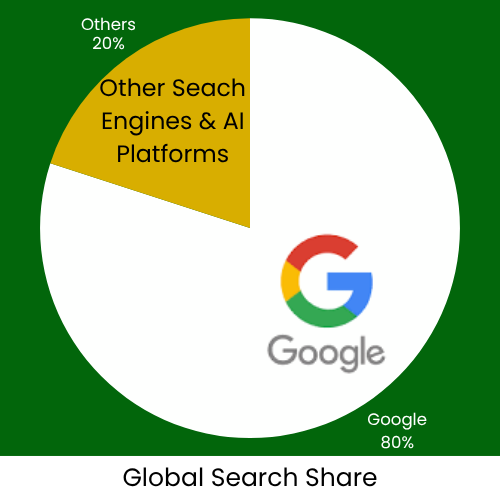
Absolutely. Google still owns about 80% of global search, according to Digital Applied. This is about a 10% decrease compared to pre-AI search share. However, it’s important to note that people are leaning more into AI for learning and research compared to Google. So, you will want to be sure those using AI platforms to learn more about your field or specialty that your organization has the answer and depth that will provide AI with material to cite.
Google is still receiving the bulk of inquiries for local businesses, shopping, and branded searches/navigational searches.
New Challenges That Arise from the Use of AI for Search
Immediacy and attention spans are changing. As the hectic nature of life increases and answers are even easier with the use of AI, searchers and your potential members expect quick and simple answers.
But don’t despair…
While many searchers are looking for quick answers (think trivia style questions and answers), many are looking to explore deeper. Now, reverse engineer the questions one may ask if they’re wanting to explore your offering more deeply or your topic.
Understanding AI-to-Website Traffic Is Just Emerging
Data regarding web traffic from AI platforms is just emerging. As you may know, content marketers and SEO strategists love data. I remember a time when I visited Google Analytics and Google Search Console daily… and spent countless hours on SEMrush. Now, wrapping my brain around a new method of search is turning my attention to researching any new advances in increasing search share from the point of view of large language models.