Executive Summary
In an effort to expand access to life-changing Transcranial Magnetic Stimulation (TMS) therapy, the Foundation for the Advancement of Clinical TMS (FACTMS) partnered with Parthenon Management Group’s (PMG) Development Team to launch an ambitious initiative to fund and establish low-cost Transcranial Magnetic Stimulation (TMS) clinics across the United States in partnership with local mental health clinics.
Powered by the PMG Development team’s approach to cultivating strategic partnerships while maintaining operational oversight, FACTMS successfully launched this program and scaled it from its initial pilot site to a multi-site national network.
By managing complex multi-party contracts, coordinating with local clinical leadership, and ensuring seamless rollout timelines, the partnership has established a sustainable blueprint for bringing TMS therapy to historically underserved populations.
The Challenge: Scaling Specialized Care for Vulnerable Populations
While TMS therapy has emerged as a successful intervention for treatment-resistant depression, high equipment costs and specialized training requirements often restrict its availability. For community mental health centers and low-income populations, access to this breakthrough care has historically been out of reach.
FACTMS sought to bridge this gap by funding specialized equipment and training within existing non-profit and community health infrastructures. However, expanding a clinical footprint across multiple state jurisdictions required substantial operational scaffolding, rigorous contract management, alignment with clinics, and tight project timelines to move from a signed agreement to an active, operational clinic. Furthermore, the initiative needed funding to get off the ground.
The Solution: Disciplined Footprint Expansion & Network Infrastructure
PMG cultivation efforts led to a gift of $450,000 to establish the FACTMS-funded first clinic. PMG then provided the administrative support and project management foundation needed to secure greater philanthropic funding and transform it into active, community-facing healthcare facilities.

Relationship Building & Fundraising:
PMG partnered with FACTMS to cultivate relationships with prospective donors, board members and industry leaders. In addition, FACTMS hosts several fundraising events, most prominently during the CTMSS Annual Meeting.

Strategic Contract & Milestones Management:
PMG established a standardized operational pipeline to move clinics from initial negotiation to launch. This template was successfully deployed to hit strict operational deadlines, ensuring that legal, clinical, and equipment logistics remained aligned.

Local Leadership Integration:
PMG seamlessly collaborated with embedded medical leaders on the ground, such as Dr. Jay Hughes (CMO) at Kitsap Mental Health, to ensure clinics respected local regulations while maintaining the high standards of the global clinical TMS community.

Patient Access Frameworks:
PMG supported the administration of sliding fee scale metrics. This framework allowed clinics to accept standard insurance from patients able to pay, using those revenues to directly offset and subsidize free or heavily reduced care for low-income individuals.
The Results & Scaled Public Health Footprint
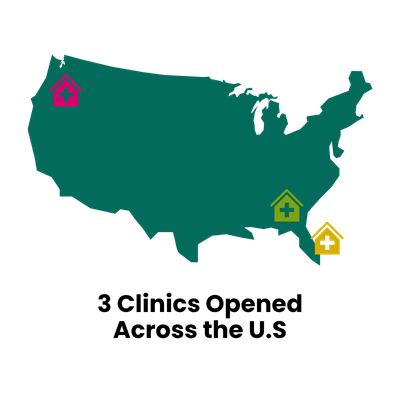


Through relationship building, organized execution, and a clear marketing roadmap, the low-cost clinic initiative achieved national expansion:
-
- Three National Clinical Hubs Established: The initiative successfully launched and stabilized critical care centers spanning the East Coast to the Pacific Northwest:
-
-
- Kitsap Mental Health (Bremerton, Washington)
- Gateway Regional Services Board Savannah, Georgia)
- Alpert Jewish Family Services (West Palm Beach, Florida) (On track for a strict September 1st operational launch)
-
-
- Sustainable Healthcare Delivery: By backing the clinics’ generous, sliding fee scales, the program effectively removed financial barriers to care without requiring permanent, ongoing funding for daily operations.
- Asset Visual Optimization: PMG integrated real-world clinic openings and ribbon-cutting photography into a broader philanthropic narrative, boosting visibility for FACTMS fundraisers and demonstrating clear, measurable ROI to foundational donors.
- Three National Clinical Hubs Established: The initiative successfully launched and stabilized critical care centers spanning the East Coast to the Pacific Northwest:
Key Takeaway for Foundational Scale: “Expanding medical access isn’t just a matter of goodwill and intent; it requires rigorous relationship building, strategic planning, and operational architecture. When an association management partner creates opportunities to connect with philanthropists, develops a strategy and handles the logistics and contract milestones, medical foundations can successfully transition from high-level advocacy to direct, life-changing community impact.”